PTBP Web Desk
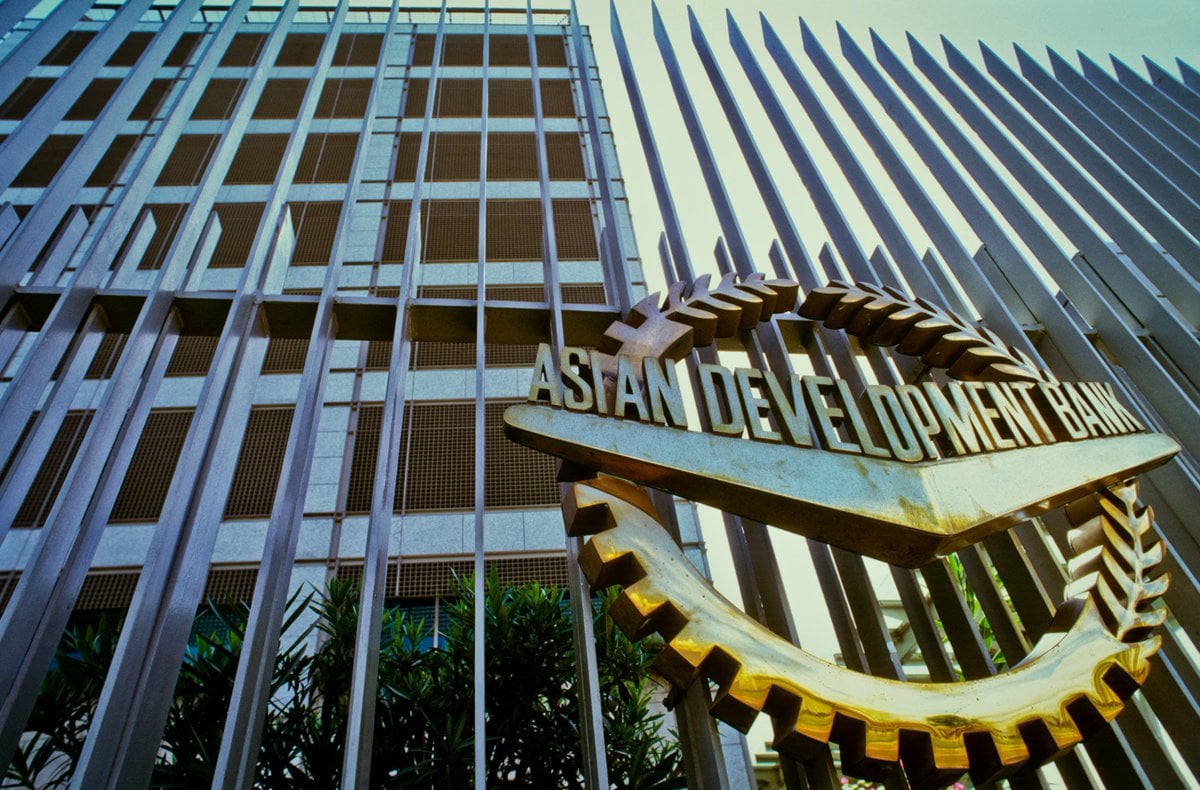
The Asian Development Bank (ADB) has upgraded the Pakistan growth outlook for both 2025 and 2026, citing stabilizing food prices, improved industrial activity, and a stronger-than-expected economic performance in the previous fiscal year. The findings were highlighted in ADB’s latest publication, “Asian Development Outlook: Growth Steadies but Uncertainty Lingers.”
According to the report, Pakistan’s economic environment has improved more rapidly than earlier projected as recovery efforts after the devastating floods gained momentum. The stabilizing prices of essential food commodities have played a significant role in easing inflationary pressures, which previously spiked sharply in the months following the floods.
In its regional overview, ADB noted that South Asia’s growth forecast for 2026 has been revised upward, mainly due to improved projections for Pakistan and Sri Lanka. The Bank attributed this revision to stronger public investment, better-than-expected post-disaster recovery, and a less severe impact of flooding than earlier feared.
For Pakistan, the economic rebound observed in the last quarter of FY2025 was a key driver behind the upward adjustment. Growth projections for countries like India and Bangladesh remain steady, while Nepal continues to face uncertainty due to recent civil unrest and political transitions.
To explore the full ADB report, readers may visit the official Asian Development Bank website (external link).
The government of Pakistan has revised its GDP growth estimate for FY2025 to 3%, up from the previously projected 2.7%. According to ADB’s analysis, the economy recorded an impressive 5.7% growth in Q4 of FY2025, driven by a strong performance in large-scale manufacturing and improved agricultural supply chains.
The report further emphasized that Pakistan’s industrial sector has continued to expand during FY2026. Manufacturing output—particularly in textiles, food processing, and consumer goods—has shown steady improvement after several months of volatility triggered by flooding and supply disruptions.
For a detailed history of Pakistan’s economic indicators, readers can refer to the Pakistan Bureau of Statistics (internal link suggestion).
One of the most significant improvements highlighted in the ADB report is the decline in inflation. During the first four months of FY2026, inflation fell to 4.7%, a notable decrease compared to 8.7% during the same period last year.
This decline is primarily linked to the stabilization of prices of basic food items. After the floods, Pakistan witnessed sharp increases in the cost of wheat, rice, sugar, and vegetables. However, better domestic supply management and an improvement in import availability have helped restore normal pricing trends.
The easing of inflation has strengthened consumer confidence and supported a gradual recovery in household purchasing power — a critical factor for overall economic resilience.
Beyond Pakistan, ADB has upgraded growth projections for developing Asia and the Pacific as a whole. The region is now expected to grow by 5.1% in 2025, higher than the earlier forecast of 4.8%. The outlook for 2026 has also been raised to 4.6%.
The Bank attributed this momentum to:
- Stronger-than-expected exports, especially in semiconductors and technology products
- Moderating inflation across major regional economies
- Stability in financial markets
- Reduced global trade uncertainty after recent trade agreements with the United States
According to ADB Chief Economist Albert Park, the region has shown remarkable resilience despite worldwide volatility in trade and financial markets. Park stressed that continued commitment to open trade and investment will be essential for sustaining long-term growth.
Despite the positive outlook, the ADB has cautioned that risks to regional and national growth remain. These include:
- Potential escalation of global trade tensions
- Financial market volatility
- Geopolitical challenges
- A sharper-than-expected decline in China’s property market
These external pressures could indirectly affect Pakistan through reduced export demand, fluctuating commodity prices, or tighter global financial conditions.
ADB also expects inflation across developing Asia to decline to 1.6%, slightly lower than its earlier projection. This trend is driven mainly by reduced food inflation in India, which has a large regional impact due to its economic size. The inflation forecast for next year remains steady at 2.1%.
Lower inflation, combined with robust export activity, is expected to support stable growth across the region, including Pakistan.