PTBP Web Desk
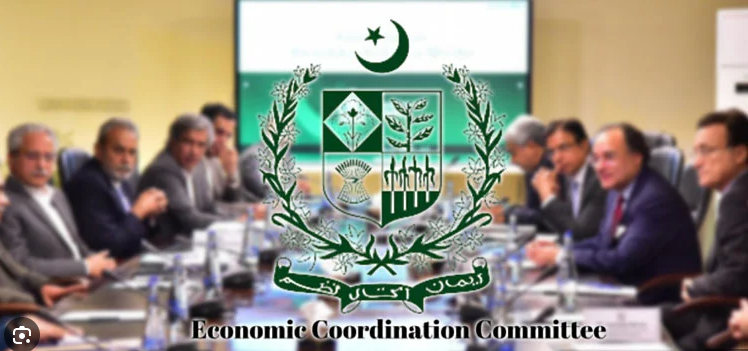
The Economic Coordination Committee (ECC) of the Cabinet convened on Tuesday at the Finance Division, chaired by Federal Minister for Finance and Revenue Senator Muhammad Aurangzeb. The high-level meeting brought together senior ministers, federal secretaries, and officials to review Pakistan’s key economic challenges and take policy decisions aimed at strengthening fiscal management, modernizing regulatory frameworks, and ensuring the sustainability of critical sectors such as energy, petroleum, digital governance, food security, and public-sector enterprises.
One of the most important items on the agenda was the Circular Debt Management Plan for FY 2025–26, presented by the Power Division. The circular debt issue has remained one of Pakistan’s most persistent economic challenges, affecting cash flows, operational efficiency, and the long-term sustainability of the energy sector.
The ECC stressed the importance of a clear and measurable medium-term strategy to gradually reduce fiscal reliance on government support. It directed the Power Division to work closely with the Finance Division to devise a coordinated plan to manage liabilities, rationalize subsidies, and ensure efficient financial operations.
Additionally, the Committee instructed the Power Division to implement a follow-up mechanism with the DISCOs to ensure that targets agreed with the government—particularly those related to losses, recoveries, and system efficiencies—are delivered without delay. Strengthening DISCO performance has remained a priority due to rising losses, weak bill recoveries, and governance gaps.
For more background on circular debt issues, readers may refer to external reports published by the World Bank or related summaries available on the Ministry of Energy’s official website.
In another major decision, the ECC approved revisions to Pakistan’s vehicle import policy, based on a summary submitted by the Ministry of Commerce. The Committee decided to retain only two schemes for importing used vehicles:
- Transfer of Residence Scheme
- Gift Scheme
Under the revised framework, all imported vehicles under these schemes will be subject to commercial-import safety and environmental standards, bringing them in line with global compliance benchmarks. Moreover, the intervening import period has been extended from two years to three years, giving overseas Pakistanis greater flexibility.
The ECC also decided that imported vehicles would remain non-transferable for one year, a policy intended to prevent misuse of the schemes for commercial resale.
The Committee also reviewed a proposal to revise the margins of Oil Marketing Companies (OMCs) and petroleum dealers on MS (petrol) and HSD (diesel). The adjustment aligns the margins with the National CPI for 2023–24 and 2024–25, with increases capped between 5% and 10%.
The ECC approved that half of the margin increase would become effective immediately, while the remaining half would depend on progress in digitizing the petroleum supply chain. The Petroleum Division will present its progress report by June 1, 2026, highlighting transparency measures and enforcement of digital tracking systems.
Another significant decision was the approval of strict restrictions on chloroform imports (Trichloromethane), based on its toxic and carcinogenic properties. The ECC agreed that chloroform may only be imported by pharmaceutical companies, and even then only with a DRAP-issued No Objection Certificate (NOC).
This measure aligns with global health and safety standards while restricting misuse of regulated chemicals.
The ECC reviewed a summary regarding a concessionary gas/RLNG tariff for M/s Ghani Glass. After discussion, the Committee decided the request was not tenable, noting that sector-specific subsidies were no longer permissible under ongoing economic reforms.
Officials added that broader export-support initiatives were already underway across multiple sectors, making company-specific subsidies inconsistent with national policy.
The Committee approved a Technical Supplementary Grant (TSG) of Pakistan 1.28 billion for the Pakistan Digital Authority (PDA). The grant is expected to accelerate digital transformation, strengthen e-governance, and support enhanced coordination between government entities.
Additionally, the ECC approved the release of funds as a technical supplementary grant to support Cabinet Division development expenditure for FY 2025–26. These allocations will support modernization projects, governance reforms, and technology-led improvements in public service delivery.
The Committee also approved an allocation of Pakistan 5 billion to the Housing and Works Division for the current fiscal year.
The Ministry of National Food Security and Research presented a summary proposing the creation of a special-purpose company dedicated to winding up the Pakistan Agricultural Storage & Services Corporation (PASSCO).
The ECC approved the proposal, authorizing:
- Incorporation of the new company
- All administrative and financial arrangements
- Required regulatory exemptions
- Appointment of initial subscribers and interim management
Once PASSCO’s liabilities are settled and its mandate is completed, the company will be dissolved. This decision follows long-standing discussions regarding PASSCO’s financial inefficiencies and the need for restructuring.
The Committee also granted in-principle approval for releasing allocations to PIA Holding Company Ltd. (PIAHCL). These funds will help meet pension and medical liabilities of employees following the restructuring of Pakistan International Airlines.