PTBP Web Desk
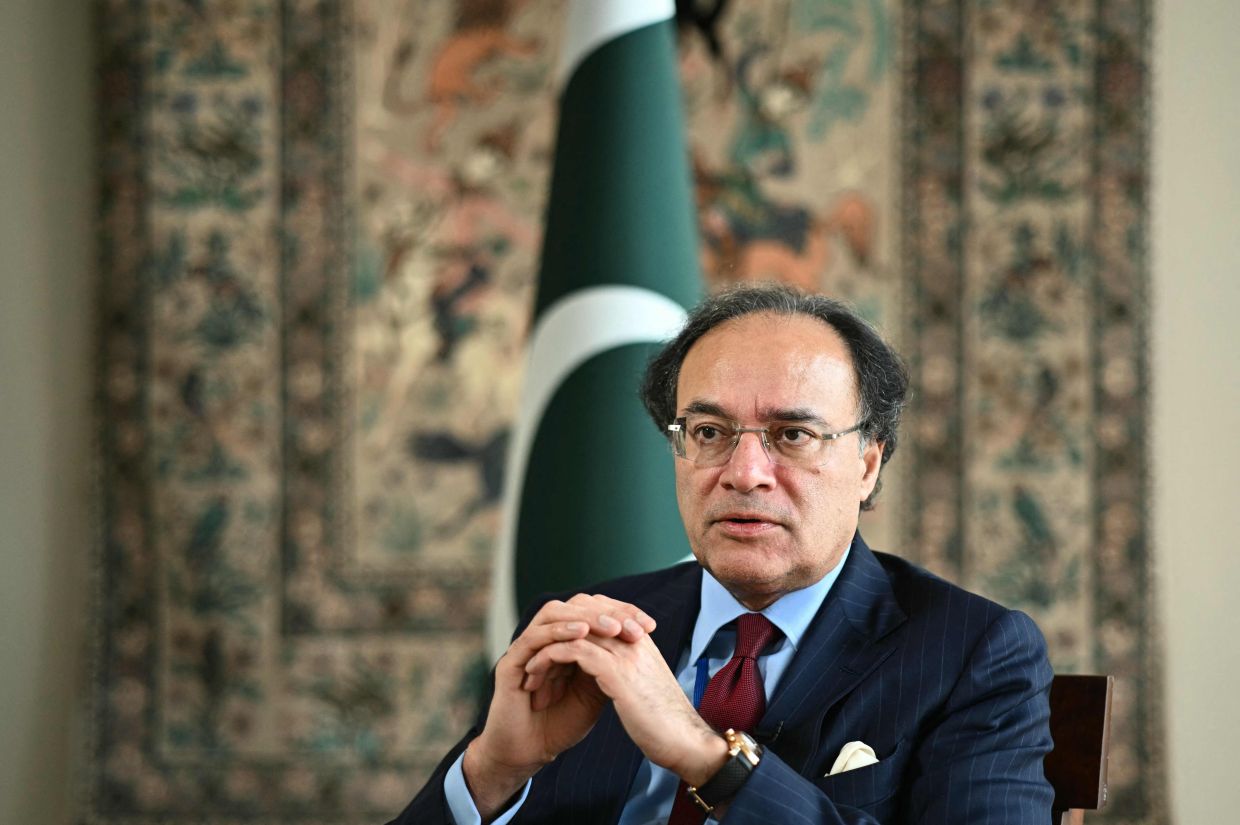
Finance Minister Muhammad Aurangzeb has said that the successful completion of Pakistan’s IMF reviews marks a major step forward in reinforcing the country’s economic resilience and strengthening its financial position. Speaking on Tuesday, Aurangzeb noted that despite the severe disruption caused by recent floods, Pakistan has demonstrated stability, discipline, and a commitment to economic reforms.
According to the statement issued by the Finance Division, the minister emphasised that the outcome of the second review under the Extended Fund Facility (EFF) and the first review under the Resilience and Sustainability Facility (RSF) reflects the collective effort of multiple government institutions. These include federal ministries, provincial governments, senior secretaries, and other agencies working together to maintain progress under the IMF programme.
Aurangzeb expressed gratitude to all institutional partners whose cooperation enabled Pakistan to advance its structural reform agenda. He said that the coordinated efforts across the federal and provincial levels were key contributors to the IMF’s positive assessment.
Opening the meeting of the Economic Coordination Committee (ECC) earlier in the day, the minister highlighted that this commitment and discipline in implementing economic reforms had played a crucial role in strengthening Pakistan’s economic management. According to him, the country’s performance sends a strong signal of stability to international financial institutions and global markets.
The minister welcomed the IMF Executive Board’s announcement confirming completion of the EFF’s second review. This approval enables Pakistan to access around $1 billion from the EFF programme. Additionally, the completion of the first RSF review will release another $200 million to support climate resilience and long-term policy frameworks.
Aurangzeb noted that the IMF’s latest assessment acknowledged Pakistan’s strong programme implementation, which remained on track even during the devastating floods. He said the positive evaluations from the IMF are an important endorsement of the government’s reform strategy, its fiscal policies, and its commitment to macroeconomic stability.
For internal context, publications such as your website’s Business & Economy section can further elaborate on the significance of IMF-linked reforms.
For external context, the official IMF announcement is available on www.imf.org.
One of the central points of the IMF’s assessment was Pakistan’s ability to withstand the economic impact of the catastrophic floods without seeking immediate rescue or relief financing. Aurangzeb highlighted that this recognition underscores the country’s strengthened fiscal and external buffers, which allowed it to absorb shocks more effectively than in previous years.
According to the minister, this improved resilience reflects better planning, stricter fiscal management, and timely reforms introduced by the government. These developments also create a foundation for improving external financing conditions and restoring investor confidence.
Aurangzeb said that Pakistan’s ability to maintain stability during the flood emergency was directly linked to the government’s success in preserving critical fiscal space. The buffers allowed Pakistan to manage the crisis without diverting from its reform path or compromising the targets set under the IMF programme.
He added that the IMF’s endorsement of Pakistan’s policies and resilience strengthens the country’s credibility at a time when IMF disbursements totaling around $1.3 billion have been approved under both the EFF and RSF. This financial assistance will support economic stabilisation efforts and help Pakistan stay on track with longer-term reforms.
The finance minister reiterated his ministry’s appreciation for the collaboration of federal and provincial institutions. He stated that the government’s coordinated effort in implementing the reform agenda will consolidate economic gains achieved so far and ensure that Pakistan continues on a stable path.
Additionally, Pakistan’s consistent performance under the IMF programme contributes to better global perception, improved financing conditions, and greater opportunities for economic recovery.
Aurangzeb emphasised that the IMF’s repeated acknowledgment of Pakistan’s ability to navigate the flood crisis without requiring urgent international assistance serves as a major morale boost. It also affirms the country’s ongoing reform momentum during a turbulent global economic environment.
Looking ahead, Aurangzeb underscored that the government will continue working closely with the IMF on key policy reforms. These include improving revenue mobilisation, rationalising expenditures, and enhancing climate resilience through RSF-supported initiatives. He highlighted that the reviews come at a crucial stage, as Pakistan looks to secure stability, promote economic discipline, and prepare for medium-term recovery.
He also reiterated the importance of sustained cooperation among institutions, noting that Pakistan’s strengthened position today reflects years of consistent reform efforts.