PTBP Web Desk
Pakistan’s economic reforms, International Monetary Fund (IMF) Managing Director Kristalina Georgieva has openly commended the efforts led by Prime Minister Shehbaz Sharif. Speaking to the media at the prestigious World Economic Forum in Davos, Georgieva expressed high regard for the Pakistani leadership’s commitment to change.She stated, “I have the utmost respect for Prime Minister Shehbaz Sharif.” This praise underscores the growing international confidence in Pakistan’s economic direction under the current administration.Georgieva went further, describing the Prime Minister as someone deeply serious about fostering positive change and development in Pakistan.
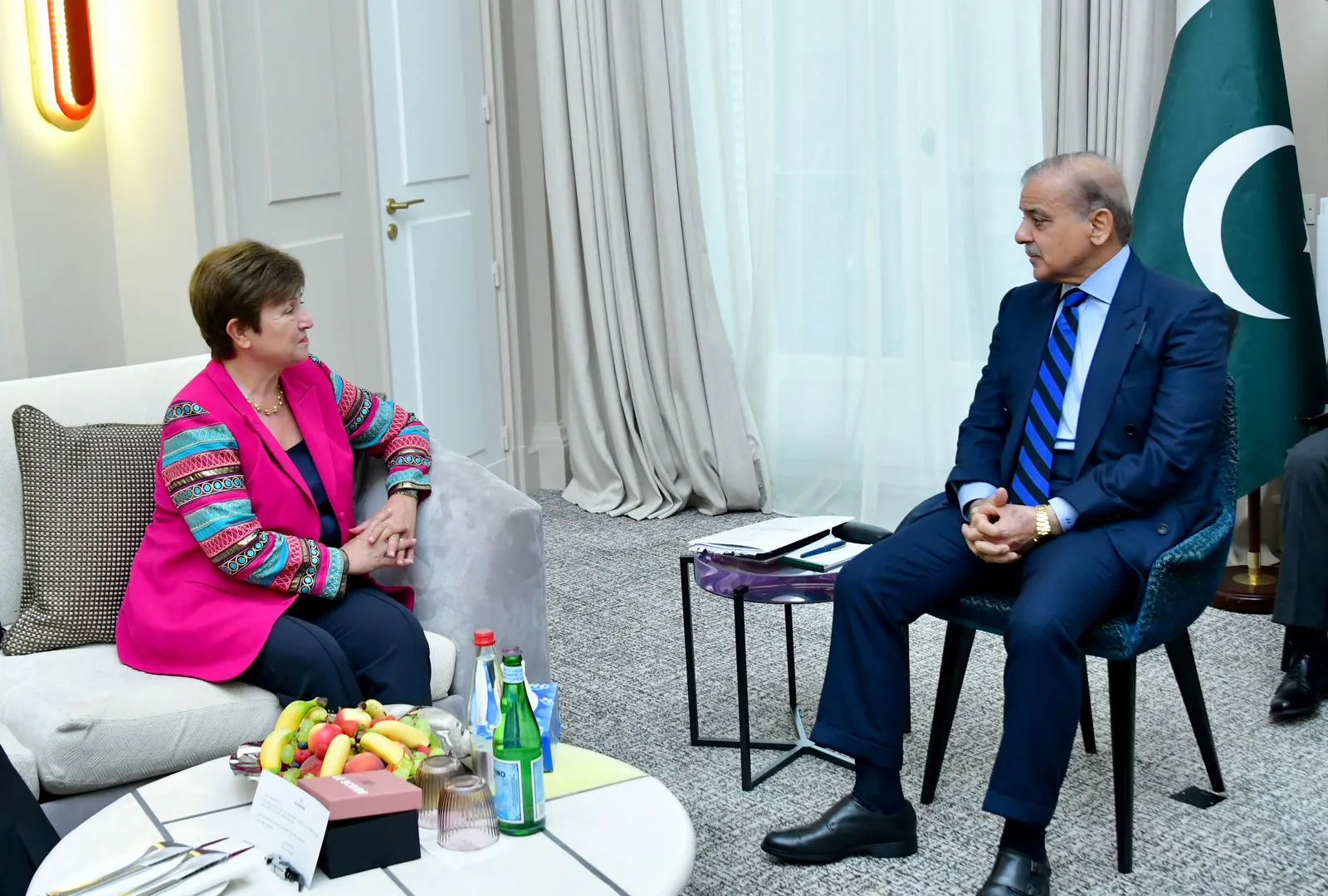
“The Prime Minister is serious about positive change and development in Pakistan. When Shehbaz Sharif sets out to do something, he completes it,” she remarked. Such words from the head of the IMF carry substantial weight, especially given the Fund’s long-standing engagement with Pakistan on fiscal and structural adjustments.The comments came shortly after a bilateral meeting between Prime Minister Shehbaz Sharif and Georgieva on the sidelines of the WEF. During that discussion, the Prime Minister updated the IMF chief on Pakistan’s improving macroeconomic indicators, stabilization measures, and steady progress under the ongoing IMF program .Long-Standing Constructive Engagement Between IMF and Pakistan Georgieva highlighted the productive relationship between the IMF and Pakistan.
“We have met several times, and in the meetings, we discuss the achievement of previously set goals and new development goals,” she explained. She added that she highly appreciates the seriousness demonstrated by Prime Minister Shehbaz Sharif and his cabinet in pursuing Pakistan’s development and tackling the challenging reform agenda.For years, the IMF has collaborated closely with Pakistani authorities to address economic vulnerabilities.
This includes efforts to stabilize the economy, reduce fiscal deficits, and promote sustainable growth. Under the current $7 billion IMF Extended Fund Facility (approved in September 2024), Pakistan has focused on critical areas such as revenue enhancement, expenditure rationalization, and structural improvements in key sectors.The IMF chief noted that the Pakistani government is implementing these reforms earnestly.
“The IMF had been working constructively with Pakistan for a long time and the Pakistani government was implementing reforms in earnest,” Georgieva affirmed.Tangible Results: Budget Discipline and Improved Resource AllocationOne of the most encouraging aspects highlighted by Georgieva is the emerging positive outcomes from these efforts. “The government’s actions are starting to bear fruit,” she said. For the first time in recent memory, there is visible budgetary discipline in Pakistan.
This discipline ensures that public resources are managed more efficiently and directed toward initiatives that genuinely improve citizens’ lives.“For the first time, budgetary discipline has been seen and resources are being spent for positive changes in the lives of the people,” Georgieva emphasized. This shift marks a departure from past patterns of fiscal slippage and allows for better investment in social protection, infrastructure, health, and education—sectors vital for long-term prosperity.These remarks reflect broader progress in Pakistan’s economy. Recent indicators show stabilization in inflation trends, improved foreign exchange reserves, and better performance in meeting fiscal targets. Such developments strengthen Pakistan’s case for continued international support and potential future financing. Why This Praise Matters for Pakistan’s Future Praise from Kristalina Georgieva signals growing global trust in Pakistan’s reform trajectory.
It comes at a crucial time when the country aims to build on recent gains amid global economic uncertainties. The World Economic Forum in Davos serves as a key platform for world leaders to discuss such issues, and positive feedback from the IMF can encourage investor confidence and bilateral partnerships.Prime Minister Shehbaz Sharif’s leadership has been central to this momentum. His administration has prioritized tough but necessary measures, including energy sector reforms, tax base broadening, and governance improvements. By honoring commitments to the IMF, the government demonstrates reliability—a quality Georgieva explicitly praised by calling the Prime Minister a “man of his word” in related reports.Looking ahead, continuity in these reforms remains essential. The IMF has stressed maintaining momentum to ensure sustainable growth. Pakistan’s journey toward economic resilience depends on sustained implementation, and international endorsements like this one provide both validation and motivation.