PTBP Web Desk
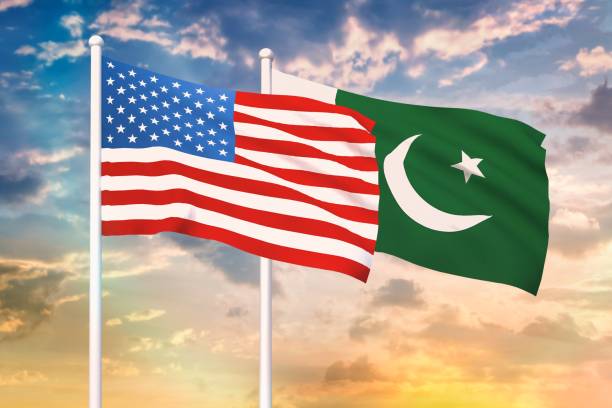
A new round of US-Iran peace talks Islamabad negotiations is set to begin as American envoys arrive in Pakistan’s capital amid efforts to stabilize a fragile ceasefire in the Middle East. However, uncertainty remains over whether direct negotiations between the two sides will actually take place.
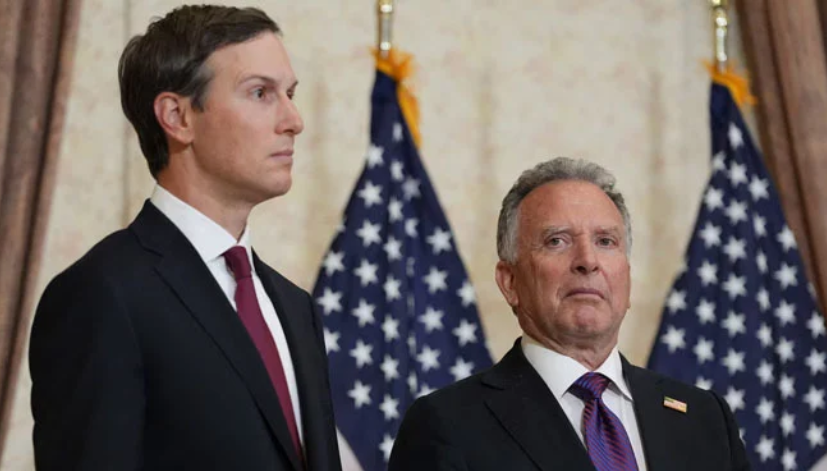
According to the White House, senior US representatives Steve Witkoff and Jared Kushner are traveling to Islamabad to engage in what has been described as an “in-person conversation” with Iranian representatives.
Uncertainty Over Direct Negotiations
Despite the announcement, Iranian state media has clarified that direct talks are not expected. Instead, Iran has indicated that Islamabad will act as a communication bridge to convey its proposals to Washington.
Iranian Foreign Minister Abbas Araghchi arrived in Islamabad on Friday, ahead of the diplomatic engagement. However, Iranian officials have signaled that formal face-to-face negotiations with US envoys are unlikely at this stage.
The ongoing US-Iran peace talks Islamabad negotiations are taking place against the backdrop of continued geopolitical tension following months of instability in the region.
US Position and Diplomatic Efforts
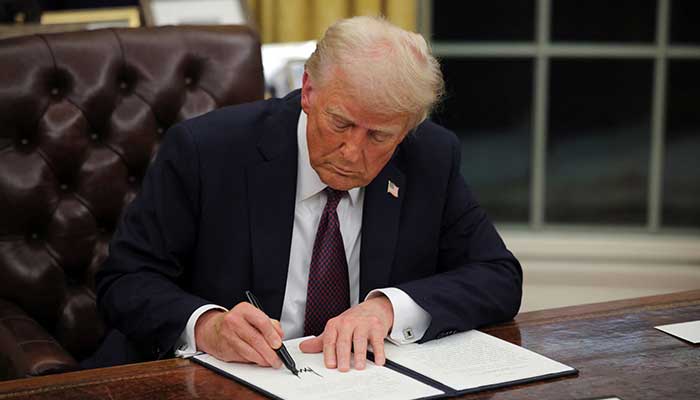
White House Press Secretary Karoline Leavitt stated that Iran had requested the meeting, following a call by US President Donald Trump for direct engagement. She said the talks aim to “move the ball forward towards a deal,” although she acknowledged that outcomes remain uncertain.
Vice President JD Vance, who previously led a round of negotiations in Islamabad, is not currently participating but remains on standby if needed.
Regional Role of Pakistan
The Pakistan has once again positioned itself as a diplomatic facilitator in the US-Iran peace talks Islamabad negotiations, offering a neutral platform for communication between the two sides.
Pakistan’s Foreign Ministry confirmed Araghchi’s visit, stating that discussions will focus on regional peace and stability. However, it did not directly confirm any formal trilateral engagement.
Strait of Hormuz Crisis and Global Impact
A major point of concern remains the situation in the Strait of Hormuz, where tensions have disrupted global energy supplies. Iran has restricted maritime movement through the waterway, allowing only limited shipping, which has created uncertainty in global oil and LNG markets.
European Council President Antonio Costa has called for the immediate reopening of the strait, emphasizing its importance for global energy security.
Market Reaction and Military Presence
Financial markets reacted positively to hopes of renewed dialogue, with oil prices easing and major Wall Street indices reaching record highs. Investors are closely watching developments in the US-Iran peace talks Islamabad negotiations as a key geopolitical risk factor.
Meanwhile, the United States has expanded its military presence in the region, including the deployment of the USS George H.W. Bush aircraft carrier, signaling continued strategic caution.