PTBP Web Desk
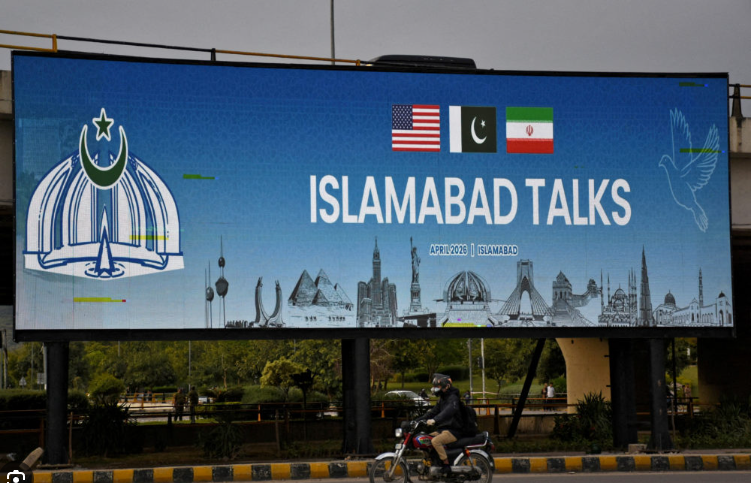
High-stakes US-Iran talks Islamabad negotiations are set to resume as Donald Trump announced that American representatives will arrive in Islamabad for discussions with Iran. The development comes at a time of heightened geopolitical tensions in the region, particularly around the strategically vital Strait of Hormuz.
In a statement posted on Truth Social, Trump said the United States is offering what he described as a “fair and reasonable” deal to Tehran. However, he warned that failure to reach an agreement could result in military action, including potential strikes on Iranian infrastructure such as power plants and bridges.
Strait of Hormuz Tensions Intensify
The upcoming US-Iran talks Islamabad negotiations follow reports of ceasefire violations near the Strait of Hormuz, a key global oil transit route. Shipping disruptions have continued despite earlier signals that the waterway would reopen.
Iran has indicated it will keep the strait closed after the United States suggested that its naval blockade would remain in place. Trump also accused Iran of firing at vessels near the waterway, including ships linked to France and Britain, calling it a breach of ceasefire commitments.
These developments have increased the urgency of diplomatic engagement, with both sides facing mounting international pressure to de-escalate tensions.
Security Tightened in Islamabad
Authorities in Islamabad have significantly tightened security ahead of the talks. Road closures and traffic restrictions have been imposed in key areas of the city as well as neighbouring Rawalpindi.
Security checkpoints have been established near major diplomatic venues, including the Islamabad Marriott Hotel and the Serena Hotel Islamabad, where previous rounds of negotiations were held.
Streets leading to these locations have been barricaded, and additional security personnel have been deployed to ensure the safety of delegations and maintain order during the high-profile meetings.
Pakistan’s Role in Mediation
Pakistan has previously hosted discussions between the United States and Iran, positioning itself as a facilitator of dialogue in the region. While earlier talks did not result in a final agreement, they reportedly made limited progress on key issues such as nuclear terms and maritime security in the Strait of Hormuz.
The current round of US-Iran talks Islamabad negotiations is expected to build on those efforts, with hopes of narrowing differences and preventing further escalation.